Have you ever wondered why certain books get published and why others don't. How is it that some authors whose literary skills leave something to be desired, yet that writer's books keep landing on your local bookstore shelf. While at the same time, writers who have spent years honing their craft can't seem to catch a break, and wallow in obscurity. It doesn't seem fair, and it's not.
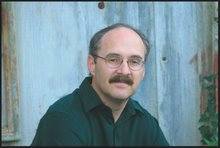
I recently came across an article written by R.L. Copple that makes some sense of this great inequity. He graciously allowed me to post it on my blogsite to share with others. I hope you find it as compelling and enlightening as I did.
Title: Why Publishers Run With The Crowd
by R.L. Copple
From the publisher's standpoint, what they are most concerned about is making enough money to stay in business. Being a bookkeeper, I know it often comes down to "How can we pay the bills this month?" "Will we have enough?" And the whole business revolves around staying alive even if the vision statement has loftier goals.
So publishers look at what's selling and hook up with that bandwagon. No one wants to be left out of the gravy train. And editors looking for the next big seller are given the task to see what the trends are in publishing, and buy what is selling.
Just like a bookstore owner isn't going to keep a book on the shelf forever if it doesn't sell. He may buy one or two copies of a book that sells once every three to six months, but if a book becomes hot, you can bet he'll have several copies on the shelf.
Film is even worse on the lemming effect. You don't see many original made-for-movie scripts. Dreamworks seems to be one of the few actually doing totally new stuff on a regular basis. Everyone else is doing either remakes or an adaptation of a book. And it's why when you see one superhero movie make big bucks and is well liked, like Spiderman or Ironman, you'll see several superhero movies follow, including sequels to those movies.
So naturally an editor is going to be looking for what is selling. Being original, unique, a totally different story, while that might be good, is a much bigger risk to the publisher. Occasionally one of those will become the next J.K. Rowling, but many more bomb and die a horrible death, costing the publisher a lot of money that they don't get a return on.
It's akin to medical research. It takes money to fail, try again, fail again, try again, and fail again, until they finally have a solution that works. The publisher relies on the books that will be fairly safe bets to generate some actual income so they have the funds to seek out that unique voice in the hopes of not following a trend, but starting one, which can be very lucrative when they do find the next big author.
So the bigger number of slots go to the what's selling, and the few slots they have for the riskier purchases from a very competitive field. You have to convince the publisher that your book is the one they should risk thousands of dollars on. Not an easy task, especially when there are so many vying for that spot.
Now, that's the publisher/editor side of the equation. For the author, do they only write what sells? They could. But what I've felt, and Dean Wesley Smith has confirmed this (http://www.deanwesleysmith.com/), is to write what you want to write, then go out and find that publisher willing to take that risk on you. It may take sending out many queries and manuscripts for years, but your concern isn't so much to make the publisher money (though you hope you do because if that's the case, you'll make money as well, and most importantly, that means a lot of people are reading your book), but to write the story burning in your heart to be written.
I've always figured if I'm not excited about a story, very few others will be either because it will come out in my writing. I've done that before, and agree the writing felt flatter. The more I've tried to write what I thought a publisher might want, generally the less compelling and interesting the story--there have been notable exceptions as always. I write better and my stories are more interesting when an idea hits me and I get excited over it, and it has to be written.
So I'm realizing over the past few months that I should write when I get that excitement. There may be times in the future that I have to fill a deadline, so I can't wait for that, but generally, how I feel about what I'm writing will come out in the story. So if I want something exciting and interesting, I have to feel that way myself about the story. If I don't feel that way, it's best to sit back and mull it over until I do get that angle or plot element or character that makes it fun.
So I'll write that way, and then go find a publisher who will publish it. An author isn't an editor, and we shouldn't write as if we are editors. Making money is their concern. Writing the story that is in our hearts is ours. That's how I look at it, anyway.
But the bottom line is, yes, your story will then often not be what they are looking for, won't fit their list which they have determined they need to fill, and a slew of other reasons. All that means is your query/story didn't capture their interest and attention long enough to hook them in. You'll get many more of those than not, unless your story happens to be what is hot right now. Expect it.
That's where the indie presses have a leg up. They are usually shooting for nitchier markets. They are more willing to take the risk becuase their cost to publish is much lower, so a failure isn't nearly as horrible on the bottom line. They have more freedom to experiment. So it tends to be easier to get your foot in the door with one of them, especially when your story doesn't fit into whatever the standards the bigger publishers are looking for, or deem is appropriate.
The cool thing is when what you really want to write is also what's hot. If the writing is good, and the story and characters well played, you'll have an easier time of connecting, and who knows, might be able to hitch your wagon to the gravy train too. But I'd leave the "what's selling" to the publishers to figure out and write what you want, then find someone who will buy it. If you want to start a trend, it means swimming upstream. No sense lamenting that fact, just dig in and swim for all you're worth.
R.L. Copple's interests in speculative fiction started at an early age, after reading "Runaway Robot" by Lester Del Ray. Many others followed by Asimov, Bradbury, Heinlein, Tolkien, C.S. Lews, among others. He has written for religious purposes but started writing speculative fiction in 2005. Infinite Realities marks his first book, a fantasy novella. His second book, first full length novel, Transforming Realities hit the shelves March 2009. He has been published in several magazines. More info can be found at the author's website, http://www.rlcopple.com/.
 Hey everyone, copies of my new novel, After the Cross, are now available at Ellechor Publishing.